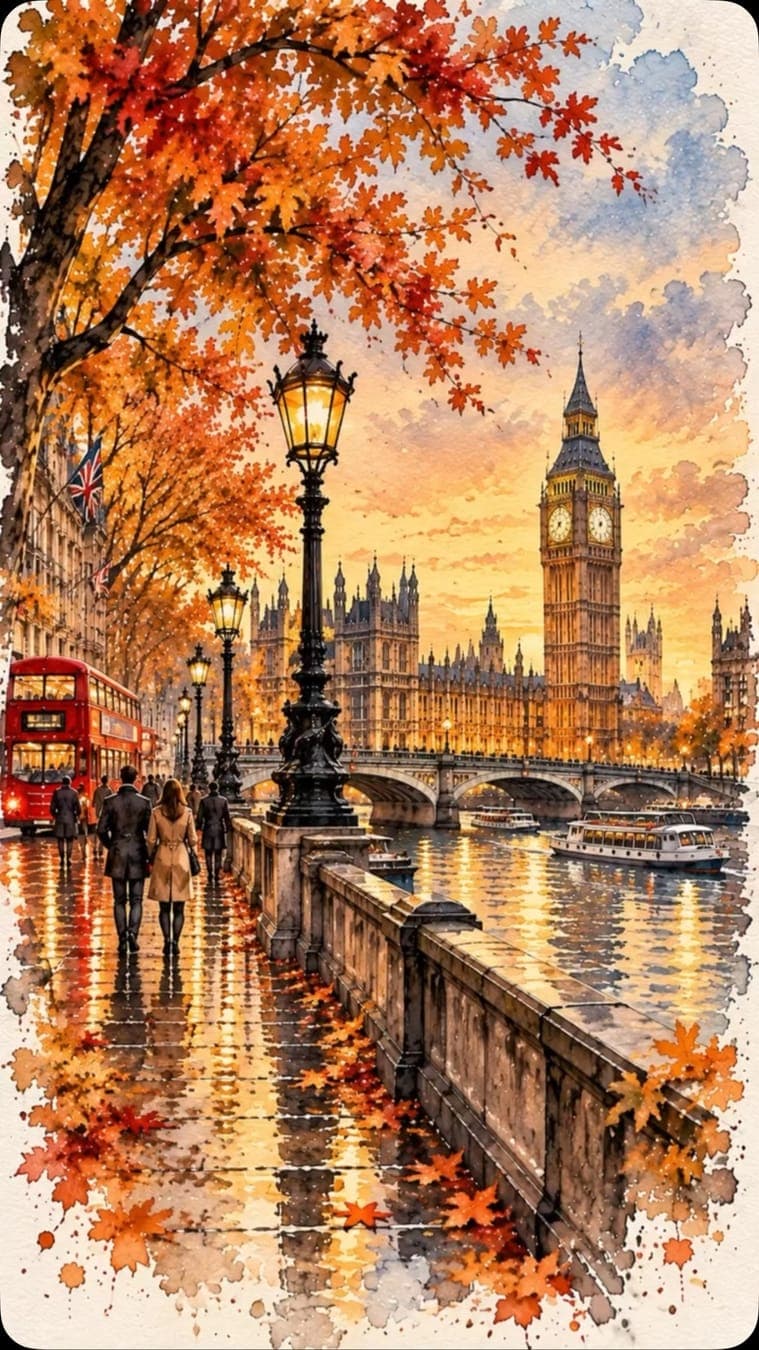
Fall
The prompt
Transform the provided photograph into a refined, realistic hand-painted watercolor painting while faithfully preserving the original scene. Keep the original composition, perspective, proportions, subject placement, landscape, architecture, objects, and overall lighting. The result should clearly depict the same photograph, interpreted naturally through traditional watercolor rather than redesigned or reimagined. Paint the scene by hand on high-quality, cold-pressed cotton watercolor paper with a clearly visible natural paper texture. The watercolor pigments should genuinely interact with the paper grain, settling naturally into its texture and creating subtle variations in tone and transparency. Use traditional transparent watercolor painting techniques with soft layered washes, natural pigment granulation, gentle wet-on-wet transitions, selective wet-on-dry detail, subtle dry-brush marks, and naturally softened edges. The brushwork should feel confident, organic, and slightly imperfect, as if painted by an experienced watercolor artist. Avoid rendering every photographic detail. Simplify small textures and secondary elements into expressive brushstrokes and washes while keeping the main subjects recognizable and accurately proportioned. Preserve the natural color palette and lighting of the original photograph. Use transparent, slightly muted pigments rather than intense or overly saturated colors. Maintain believable light, shadow, atmospheric perspective, reflections, and depth. IMPORTANT COMPOSITION: Do not paint all the way to the edges of the paper. Leave a visible, natural margin of untouched white watercolor paper around ALL FOUR SIDES — top, bottom, left, and right. The painted area should end organically before reaching the edges of the sheet. These margins should not look like a clean rectangular border or digital frame. Instead, allow the watercolor washes to fade, feather, break apart, and dissolve naturally into the untouched paper. Some brushstrokes may extend slightly farther than others, creating irregular handmade edges, but a subtle amount of clean textured paper must remain visible around the entire artwork. The transition between painted and unpainted paper should show authentic watercolor behavior: soft pigment diffusion, broken brush edges, occasional dry-brush marks, and very restrained natural paint blooms. Keep the main subject and important foreground elements more defined, while distant and secondary areas should gradually become softer, looser, and more atmospheric. Do not use strong ink outlines around every object. Define forms primarily through watercolor values, color transitions, negative space, and selective brush detail. Fine linework may appear only where naturally needed. If people are present, preserve their original position, pose, scale, and general appearance, but render them with loose, tasteful watercolor brushwork rather than detailed digital faces. The finished piece should look like an original watercolor painting photographed or scanned from real textured watercolor paper — tactile, elegant, restrained, naturally imperfect, and unmistakably handmade. Professional traditional watercolor painting, cold-pressed cotton paper, visible paper tooth, transparent pigments, natural granulation, soft atmospheric washes, expressive brushwork, subtle pigment blooms, controlled detail, organic unfinished edges. Avoid digital watercolor filters, hyper-detailed digital illustration, cartoon styling, vector-like outlines, heavy ink contours, artificial sharpening, HDR colors, excessive saturation, plastic-looking textures, uniform paint coverage, perfectly rectangular painted edges, artificial borders, fake paper texture overlays, excessive splashes, oil paint, acrylic paint, or generic AI-art aesthetics. Do not add new elements or alter the scene. Do not invent buildings, vegetation, people, objects, weather, or background details that are not present in the original photograph.
Copy the prompt above, then paste it into your preferred image tool.